The big story this week was a round trip. Arabica futures rallied past three dollars a pound on Tuesday, then gave almost all of it back midweek once Brazil's export numbers landed, and ended the week roughly where they started.
That is the shape to hold onto: supply, not weather, drove the tape. When the world's largest grower ships a record month, speculators who had bet on scarcity take their profits and go home.
| Market | Price | This week |
|---|---|---|
| Arabica (ICE) | 287.60 ¢/lb | -1.84% |
| Robusta (ICE Nov) | $3,423/tonne | -1.78% |
The market: a rally that didn't hold
After closing near $2.93 per pound on Monday, arabica climbed on Tuesday to its highest level since early September, pushing above $3 as the Brazilian real touched a near five-month high against the dollar. A stronger real matters because it makes Brazilian growers less keen to sell dollar-priced coffee, which tightens the near-term flow and tends to lift the price.
Then came the reversal. On Wednesday prices closed sharply lower, down 3.9%, as traders sold off long positions after Brazil's Trade Ministry reported September coffee exports rose more than 20% year on year to 236,000 tonnes.
By Thursday arabica had slipped a further 1.7% to $2.876 per pound. The week's gains had evaporated, and the chart finished almost exactly where it opened.
Robusta leaned the same way. On Wednesday's session the November contract fell $62 per tonne, or 1.78%, to $3,423, while the January 2027 contract dropped $71, or 2.05%, to $3,398. The cheaper, more bitter bean behind most instant coffee eased steadily across the window.
It was, in short, a textbook profit-taking week. Nothing in the fundamentals broke; the market simply ran up on currency and then sat down again when hard supply data arrived.
Why the export number mattered so much
The trigger was Brazil's Secex data. Green coffee exports totalled 3.93 million bags last month, the highest in 20 months and up 20.4% from September 2025. For a market that spent most of this year worried about tight supply, that is a lot of coffee arriving at once.
Traders read a number like that as proof that the feared shortage is being filled. The response is mechanical: unwind the long bets placed on scarcity, and the price drops under the weight of the selling.
The bullish counterweight has not vanished, though. Certified arabica stocks held in ICE warehouses rose to 260,654 bags, recovering from an all-time low of 217,646, but they remain down more than 40% since the start of the year. The cupboard is still close to bare by historical standards.
That tension, a record harvest versus a drained buffer, is the whole story of the market right now. Fresh beans are flowing, but there is almost no cushion if anything goes wrong.
Longer term, the USDA forecasts record global production of 189.7 million bags in 2026/27, up 6% year on year. More beans are coming, and this week's sell-off was the market starting to price that in rather than panic about the low warehouse count.
The broader indicators eased too. The ICO composite read 257.85 US cents per pound on Wednesday, off a Tuesday high of 269.61, a day-on-day fall of 1.4% with its robusta group down 2.0%. Within the groups, Colombian Milds sat at 353.69 cents, Other Milds at 327.83, Brazilian Naturals at 288.48 and Robustas at 165.33.
What it means at the shelf
A single volatile week does not change what you pay for a bag. Roasters buy their green coffee months ahead, so the prices you see now reflect the far higher levels of earlier this year, not Tuesday's spike or Wednesday's slump.
The honest read is that pressure is easing, not gone. A record Brazilian crop and slowly rebuilding stocks point toward calmer prices into 2027, but a 40% drop in certified inventory means any weather scare can still jolt the futures market and, eventually, the till.
Costa Coffee put the buyer's side of that into words this week, warning that high wholesale prices are squeezing its accounts and that climate change could cut both the quality and quantity of coffee available. When a chain that size flags supply risk in its annual filing, it is the same market story told from behind the counter.
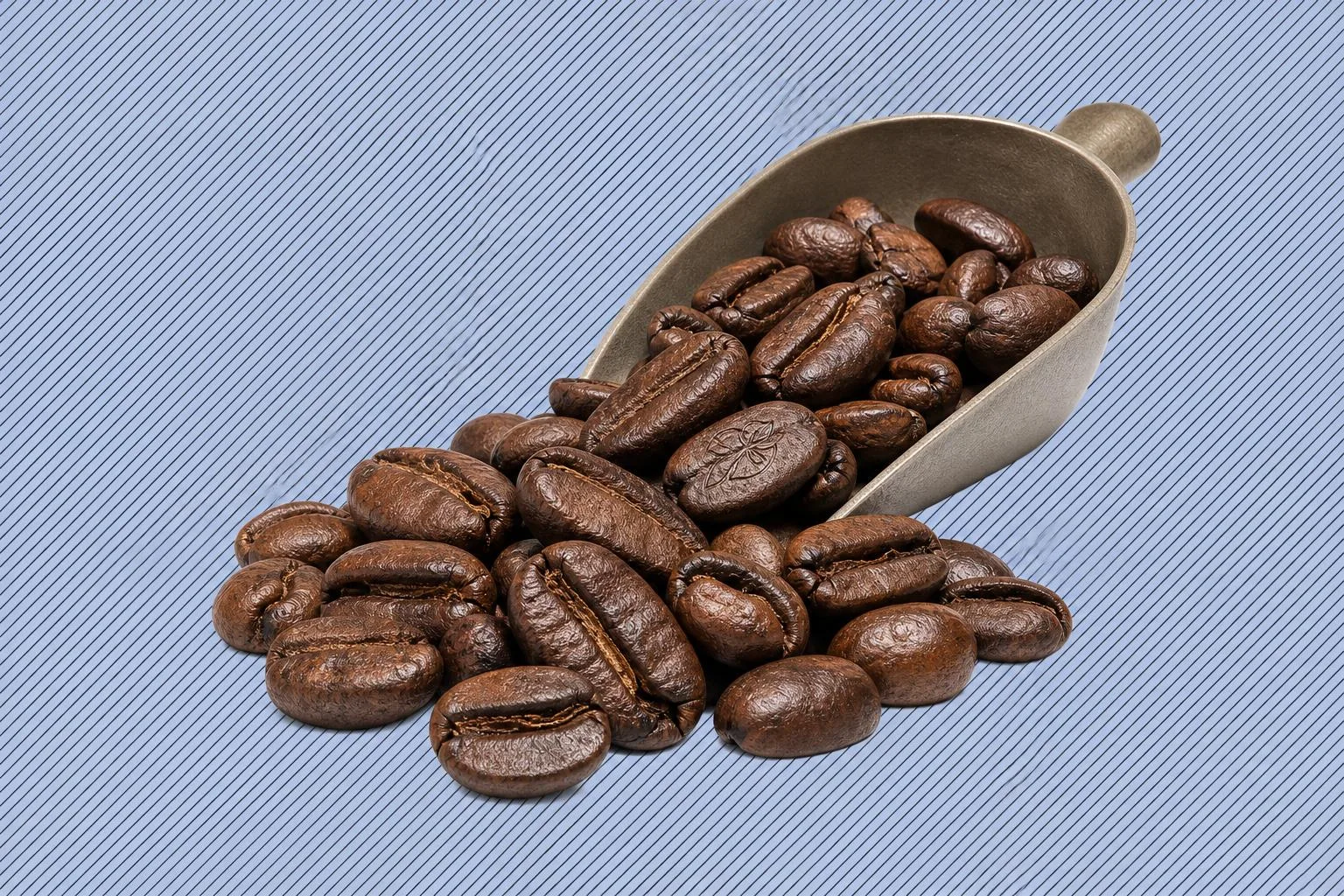
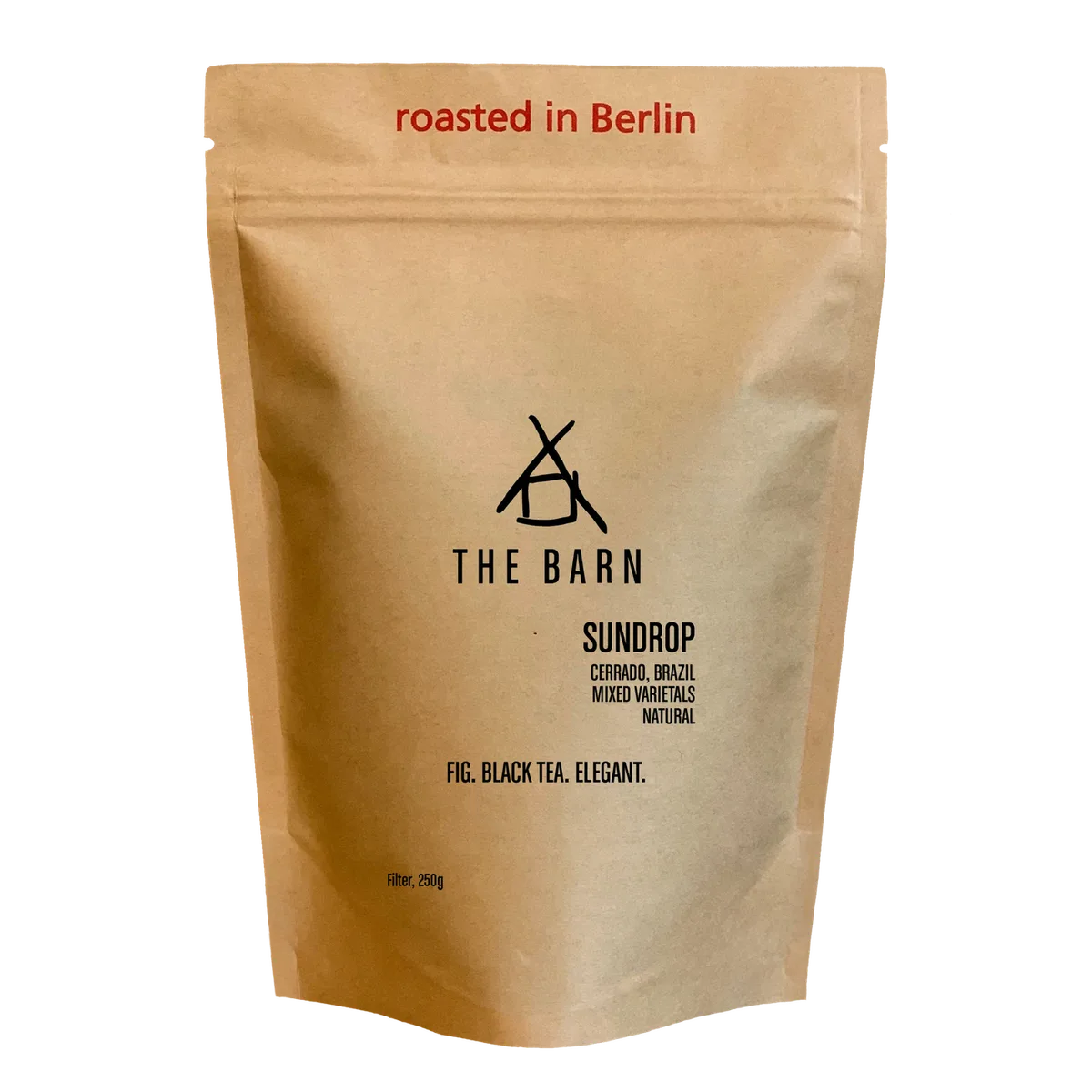
If you want to taste what Brazil's volume actually delivers, it is the nutty, chocolatey base that props up most espresso. This natural Daterra lot shows the cleaner, sweeter side of the origin, and it is in stock.
The big names: Starbucks eyes Chipotle
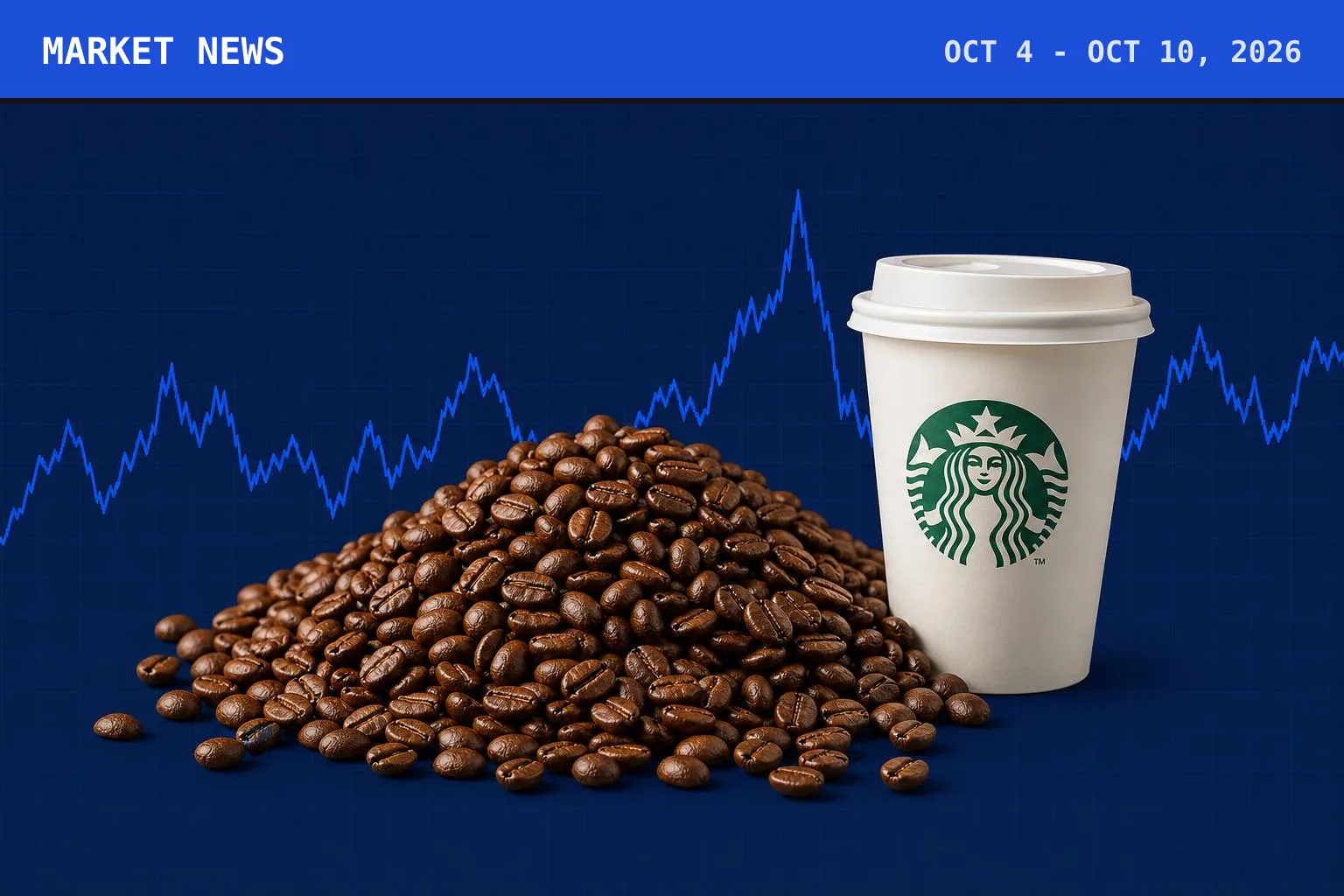
The week's loudest corporate story broke on Wednesday, when the Financial Times reported that Starbucks has been working with advisers on a takeover proposal for Chipotle Mexican Grill. It would be an unusual pairing: a coffee chain buying a burrito chain.
Markets were unsure what to make of it. Starbucks stock dropped as much as 6.7% on the news before recovering to close nearly flat, while Chipotle shares jumped about 6% as investors priced in a possible premium.
For coffee drinkers the deal talk matters less than what it signals: a Starbucks still hunting for growth outside its core cafe business. Nothing has been confirmed, and a proposal is a long way from a signed deal.
Separately, Starbucks confirmed it will report fourth-quarter and full fiscal year 2026 results after the market closes on Thursday, October 29. That call will tell us more about the health of the business than any merger chatter, because it shows how the turnaround is actually landing with customers.
The big names: Nespresso drops its compostable capsule
Also on Wednesday, Nestle-owned Nespresso said it is discontinuing its paper-based, home-compostable coffee capsules. The pods were launched in 2023 as a greener alternative to aluminium, and the company cited quality concerns in pulling them.
It is a small reversal with a bigger lesson. Making single-serve coffee both convenient and genuinely low-impact is hard, and even the biggest player in the category could not make the compostable version hold up to its taste standards.
The move pushes Nespresso back onto its recyclable aluminium pods. For anyone weighing the footprint of their morning cup, the simplest honest answer stays the same: fresh beans ground at home waste the least.
The big names: Costa's two-sided week and Dunkin's crossover
Costa Coffee had better news alongside its warning. The chain returned to profit, crediting matcha and iced drinks for pulling younger customers back through the door.
That combination, rising sales but rising costs, captures where the big chains sit right now. Demand is holding up; the margin pressure is coming from the green coffee market, not the customer.
Dunkin' kept things lighter. On Monday it announced a tie-in with Marvel Studios' "Avengers: Doomsday", with character-inspired drinks, donuts and collectibles arriving at participating restaurants from November 4.
Elsewhere in coffee
Stockholm roaster Drop Coffee opened its first store in Japan on Tuesday, a Tokyo cafe in the Nakano area built around Nordic fika culture. It is another sign of European specialty names planting flags in Asia, where demand for light-roast washed coffee keeps growing.
New figures showed just how big the trade is in one country alone. Around 1.01 million tonnes of coffee passed through Germany in 2025, with German roasters producing about 517,000 tonnes, 27.3% of Europe's output, and the sector generating 36.6 billion euros in direct value.
Lavazza marked a product launch with a cheerful survey: 43% of Britons say coffee is the best part of their day, and the average drinker spends more than 92 hours a year making and enjoying a cup. And the 2027 Good Food Awards opened entries through October 31, with coffee among the 18 categories.
What to watch next week
Two threads. First, whether Brazil's export pace holds: another strong month would reinforce this week's downward lean, while any shortfall could snap prices back given how low certified stocks remain.
Second, the Starbucks results on October 29, which will frame the chain's direction far more clearly than the Chipotle rumour. If you are shopping now, let the market noise pass and buy on taste. Our origins pages and the decide tool are the quickest way to find a cup you will actually enjoy.